
How Parking Lot Sweeping Affects Stormwater Compliance in Boise | BlakRoc
Most commercial property managers in Boise think about parking lot sweeping as a maintenance task. Fewer think about it as a regulatory obligation. It's both, and understanding the compliance side of it can save you from fines, notices, and enforcement actions that have nothing to do with how your pavement looks.
THE BASICS OF STORMWATER COMPLIANCE
The EPA's Clean Water Act requires commercial properties to manage stormwater runoff in a way that prevents pollutants from entering the storm drain system and ultimately local waterways. In Idaho, the Department of Environmental Quality administers the state's stormwater permitting program, and the City of Boise has its own stormwater management requirements layered on top of state regulations.
For commercial properties with impervious surfaces, parking lots, driveways, and loading areas, this means actively managing what leaves your property when it rains. Pollutants that collect on parking lot surfaces include sediment, sand, oil and grease from vehicles, heavy metals from tire wear, and debris from construction activity. When it rains, that material washes across your lot and into the nearest storm drain.
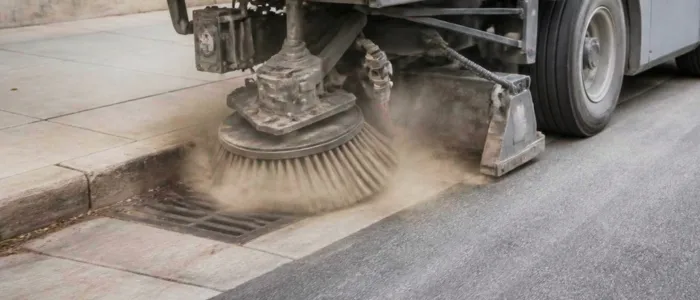
Regular sweeping removes those pollutants before they reach the drain system. It's one of the most practical and cost-effective best management practices (BMPs) a commercial property can implement for stormwater compliance.
WHAT BOISE'S STORMWATER REQUIREMENTS MEAN FOR YOUR LOT
The City of Boise's stormwater program requires commercial properties to implement BMPs that minimize the discharge of pollutants in stormwater runoff. Parking lot sweeping is explicitly recognized as a BMP under both state and federal stormwater guidance.
Properties that fail to implement adequate BMPs, or that allow significant pollutant loading to enter the storm system, can face compliance notices, required corrective action plans, and fines. For commercial property managers and HOA boards, this risk category often gets overlooked until a complaint is filed or an inspection reveals a problem.
The good news is that a consistent sweeping schedule is typically sufficient to demonstrate that reasonable BMPs are in place. Documentation matters; keeping a log of when sweeping was performed and by whom is a simple practice that provides meaningful protection if your property is ever reviewed.
BOISE-SPECIFIC CONSIDERATIONS
The Treasure Valley's climate creates specific stormwater challenges for commercial properties.
Boise's winters deposit significant amounts of sand and gravel on parking lot surfaces through de-icing operations and tracked debris from roadways. When spring arrives, that material is the first thing heavy rains carry toward your drains. Spring sweeping, before the first significant rain events, is the highest-impact sweeping of the year from a stormwater perspective.
The Treasure Valley's rapid growth means more construction activity near commercial corridors, which increases the volume of debris, sediment, and fine particles that end up on adjacent parking lot surfaces. Properties near active construction sites face a higher compliance burden and benefit from more frequent sweeping schedules.
Summer thunderstorms, while less frequent than in other climates, can move significant volumes of water across parking surfaces quickly. A lot with partially blocked drains and accumulated debris can contribute substantial pollutant loading to the storm system in a single event.
HOW OFTEN SHOULD YOU SWEEP FOR COMPLIANCE?
There's no single answer: frequency depends on your property type, traffic volume, surrounding environment, and the specific requirements of any permits your property holds. As a general guide for Boise commercial properties:
High-traffic retail or restaurant lots: Monthly sweeping minimum, with additional service after major storm events or periods of heavy construction activity nearby.
Office and professional lots: Quarterly minimum, with spring and fall as the highest priority seasons for stormwater purposes.
HOA common areas: Spring and fall at minimum. Fall sweeping before leaf decomposition begins is particularly important for drain protection.
Properties near construction zones: Sweep more frequently to manage the elevated debris load from nearby activity.
Maintaining a sweeping log: date, service provider, areas swept — is a simple practice that demonstrates proactive BMP implementation if your property is ever subject to a stormwater inspection or complaint.
Parking lot sweeping is not just a curb appeal service. For commercial properties in Boise and the Treasure Valley, it is an active component of stormwater compliance, one that protects your property from regulatory exposure while also protecting the pavement investment beneath it.
BlakRoc provides professional parking lot sweeping for commercial properties across Boise, Meridian, Nampa, Eagle, and the greater Treasure Valley.
📞 (208) 409-8007 🌐 blakroc.com 📍 Proudly serving Boise and the Treasure Valley
If you haven’t already, follow us on Instagram for more asphalt content!